APIs are the plumbing of a modern business. They connect your mobile app to your servers, your checkout to your payment provider, your CRM to a dozen other tools. Customers never see them, which is exactly why they get overlooked, and exactly why attackers love them. An exposed API can quietly stream your customer records to anyone who knows how to ask.
Why APIs fail differently
A website warns you when something looks wrong. An API simply answers the question it is asked. If it is built to trust the caller, it will happily return data that should never leave your systems. The most damaging API breaches of recent years came down to plain mistakes: an endpoint that forgot to check who was calling, an identifier that could be changed in the URL to read someone else’s account, a rate limit that was never set. Individually minor. Together, a breach. What makes these failures so dangerous is their silence. There is no crash, no alarm, no ransom note, only an interface serving requests exactly as it was told to.
This is where API pen testing earns its place. A tester maps every endpoint you expose, then tries to abuse each one the way a determined attacker would, swapping identifiers, replaying tokens, feeding malformed requests and checking whether your authorisation logic actually holds. The result is a plain account of what an outsider could reach and what it would cost you.
The authorisation trap
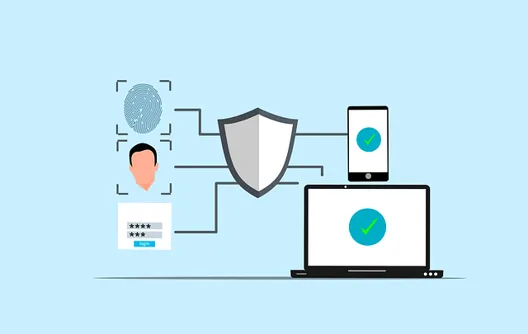
Most teams get authentication right. They ask users to prove who they are. Authorisation, deciding what each verified user is then allowed to do, is where things unravel. An API might confirm that you are logged in, yet never check that account 1043 belongs to you before handing over its data. Multiply that oversight across dozens of endpoints and thousands of records, and a single logic flaw becomes a headline. Worse, this kind of weakness scales beautifully for the attacker. Once they realise one identifier can be swapped for another, a short script can walk through every account you hold in minutes.
That gap between proving identity and enforcing permission is the one testers probe most carefully.
“With APIs, the danger is rarely the lock on the front door. It’s whether the building checks your pass once you’re inside. We routinely find endpoints that authenticate a user perfectly, then trust them completely. Testing every request against the question of whether this person should really see this is what stops a quiet leak becoming a public one.”
— William Fieldhouse, Director of Aardwolf Security Ltd
That reflects how quickly API estates grow. Each new feature ships its own endpoints, and documentation lags behind reality. Half the battle is simply knowing what you have exposed in the first place, which is why an outside review so often finds doors the business forgot it had built.
Choosing who tests them
Not every provider treats APIs with the depth they need, so it pays to choose the best pen testing company you can find, one that understands business logic rather than just tooling. Ask how they handle authorisation testing, request a sample report, and make sure their findings arrive with fixes your engineers can act on. Your APIs move your most sensitive data every second of the day, and they deserve the scrutiny you give the front door, and then some.